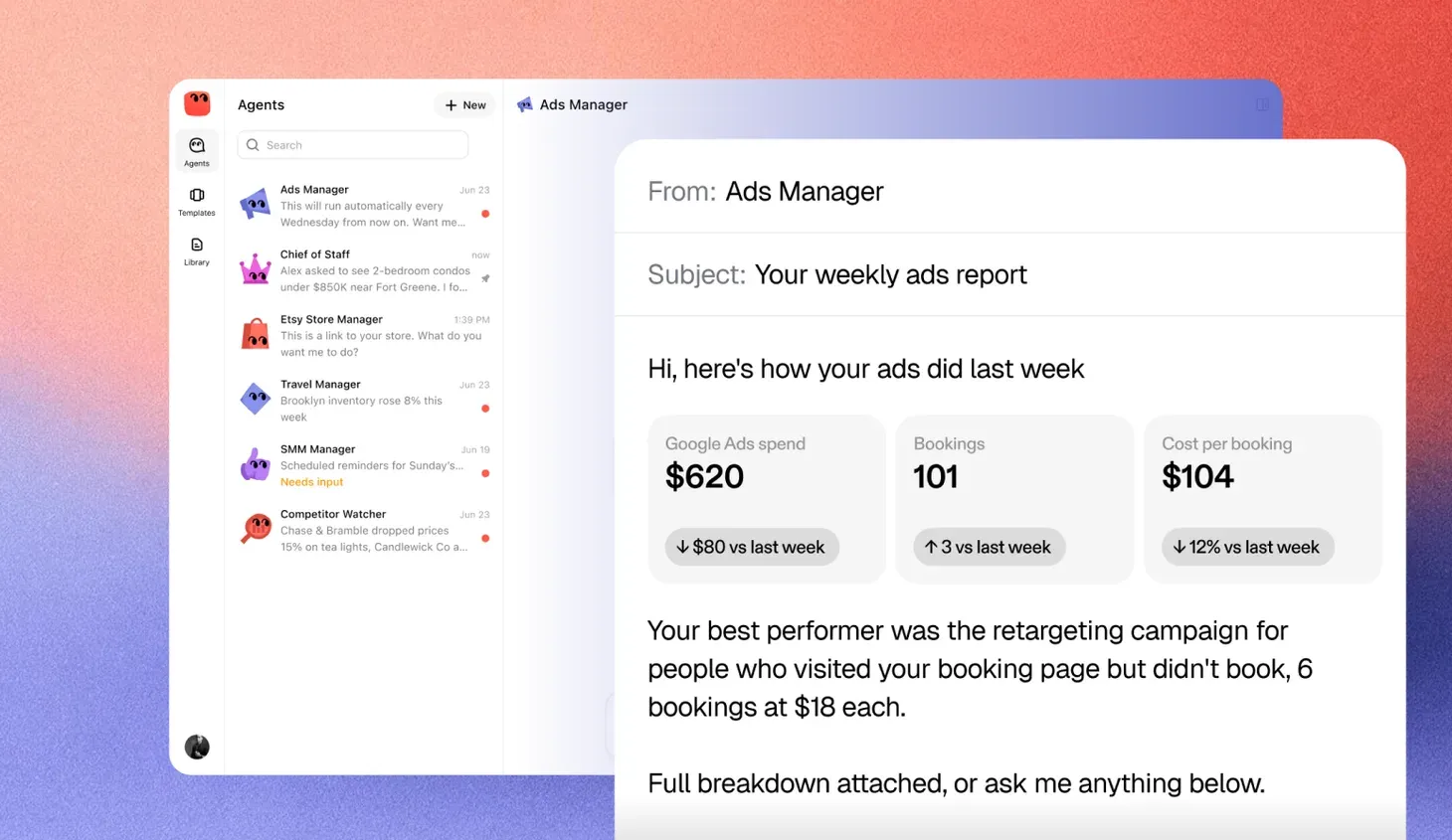
An agent with a job title, not a to-do list
An AI employee is an AI agent that has been given a role instead of a single task. Where a basic agent might chase one overdue invoice, an AI employee owns accounts receivable. It watches for overdue invoices, sends reminders, updates the books and tells you which customers need a call.
The same step up works across the back office. A basic agent might match one supplier invoice to its purchase order. An AI employee owns accounts payable. Every invoice that arrives gets matched to its order and goods receipt, the clean ones are queued for the weekly payment run, the mismatches go to the buyer who raised the order with the difference spelled out, and the payment run itself waits for a finance manager to approve.
Or take new hires. A basic agent might send one welcome email. An AI employee owns onboarding operations. When HR marks an offer as signed, it opens the requests for a laptop, email, payroll and building access, reminds each team as the start date gets closer, and tells the hiring manager on the Friday before what is ready and what is still missing.
It works in the tools you already use, like your inbox, calendar, accounting software or CRM. It keeps working on its duties over weeks and months without being prompted. Where a decision is yours, it stops and asks.
The phrase is a way of describing how you work with the software. You brief it like a hire, give it access like a hire and check its work like a hire. It is not a person, and it does not replace the judgment a person brings.
Why people use the word employee
Most managers already know how to delegate to a person. They know how to write a job description, set boundaries and review work. The employee framing borrows all of that.
It also sets the right expectations. Nobody expects a new hire to do everything on day one. Nobody gives a new hire the company bank login on their first morning. The framing reminds you to start narrow, check closely and widen the role as trust builds.
There is a risk in the word too. It can suggest the software understands your business the way a person does, or that it can be left alone entirely. It cannot. A better mental model is a careful junior hire who never forgets a task, never gets tired and still needs a manager. The OECD AI principles ask for the same thing, human agency and oversight of AI.
What an AI employee is made of
Under the job title, an AI employee is an agent with a few parts that work together.
- A role. A plain description of what it owns, such as the support inbox, the sales pipeline or bookkeeping.
- Duties. The specific recurring jobs inside that role, like replying to routine questions or matching receipts.
- Context. The documents, past records and house rules it needs to do the work the way you would.
- Tools. Access to the systems where the work happens, with only the permissions the role needs.
- Approvals. The decisions that always come to a person first.
- A record. A log of what it read, what it did and why.
- A manager. A named person who reviews its work and corrects it.
Without a role it is just a tool. Without approvals and a record it should not be near real work. Without a manager it drifts.
AI employee vs. AI assistant vs. AI agent
The three terms overlap and get used loosely. This table shows the useful differences.
| AI assistant | AI agent | AI employee | |
|---|---|---|---|
| Tools you may know | ChatGPT, Google Gemini, Microsoft Copilot Chat | OpenAI’s dots, xAI’s Grok Bot, Zapier Agents | Products sold as a named role, like Artisan’s Ava or 11x’s Alice for sales development |
| What you give it | A question or a request | A goal or a task | A role with several duties |
| Who starts the work | You, each time | A schedule, an event or you | Its own duties, on its own rhythm |
| How long it works | One conversation | Until the task is done, or on a loop | Ongoing, like a standing job |
| Scope | Whatever you ask about | One job | A set of related jobs in one area |
| How you manage it | You read the answer | You check the result | You review its record and approvals each week |
Ask ChatGPT to draft a reminder and it is an assistant. Give dots the goal of chasing overdue invoices and it is an agent. Brief a product to own receivables every week, with its own duties and a manager who reviews it, and it is being sold as an employee. In practice, an AI employee is an agent, or a small group of agents, framed around a role. The framing matters less than what it actually does and how well you can see and control it.
Roles that suit an AI employee
The roles that fit best are ones made of many small, repeatable jobs with clear rules. In a large company most of them sit in the back office, where the volume grows with the business and the rules are already written down.
Front desk and support
It answers routine questions in the shared inbox from approved replies, books appointments on the calendar, sends confirmations and routes anything unusual to the right person.
Sales follow-up
It replies to new leads, sends the second and third nudges on time, books calls and keeps the CRM accurate.
Bookkeeping help
It collects receipts, matches transactions in a spreadsheet or accounting tool, chases missing paperwork and prepares a list of questions before month end.
Collections
It watches for overdue invoices, sends polite reminders at the right intervals and flags accounts that need a personal call.
Accounts payable
It matches each supplier invoice to the purchase order and goods receipt, queues the clean ones for the payment run, sends mismatches to the right buyer and keeps a list of invoices close to their due date or early-payment discount.
Month-end close
It reconciles bank accounts and intercompany balances across entities, chases the receipts and accruals still missing, drafts the journal entries for a controller to approve and keeps a checklist of what is done before the books close.
Vendor onboarding
It collects tax forms, insurance certificates and bank details from new suppliers, checks them against policy, sends anything incomplete back and opens the vendor record once compliance signs off. A request to change a supplier’s bank details always goes to a person for a call-back.
Employee onboarding and offboarding
It opens accounts and requests equipment when someone joins, and closes access across every system on their last day, with a record IT and security can check.
IT service desk
It sorts incoming tickets, answers routine how-to questions from the knowledge base and sends access requests to the system owner with the context already attached.
Marketing upkeep
It watches ad spend against limits, pauses what is overspending within your rules and writes a weekly summary.
Roles that do not suit an AI employee are ones built on relationships, negotiation or judgment calls that change every time. Those stay with people.
Where it should stop
An AI employee acts in your systems and often speaks for your business. That makes its limits more important than its skills. A few lines are worth drawing on day one.
- Money. Payments, refunds and discounts wait for a person, at least until there is a long record of good judgment.
- First impressions. The first message to a new customer or a large prospect is worth a human read.
- Disputes. Anyone who is upset, late on a large balance or asking for something unusual gets a person.
- Volume. A daily cap on emails, changes or spend keeps a mistake small while you learn how it behaves.
Good software makes these lines easy to set and easy to see, and it keeps a record of every time it stopped to ask.
What it needs from you
The work of setting up an AI employee looks a lot like onboarding a person.
- Write the role. One paragraph on what it owns and what good looks like.
- List the duties. The recurring jobs inside the role, in order of importance.
- Share the context. Price lists, policies, past emails you liked, the things you never say.
- Connect the tools. Only what the role needs, with the narrowest access that works.
- Set approvals. Payments, refunds, discounts, first contact and anything unusual are common choices.
- Name a manager. Someone who reads its weekly record and corrects it.
- Plan the first month. Start with one duty, review closely, then add the next.
A sensible first hire
Pick the role that hurts most when it slips. In many companies that is a back-office queue that grows every quarter, like supplier invoice exceptions or overdue receivables. Give the AI employee that one duty, in one entity or team, with approval on every action that matters, and read its record every few days.
After a few weeks you will know two things. Whether it does the work on time, and whether its judgment matches yours on the cases it brings to you. If both hold, add the next duty in the same role. If not, tighten the brief before you widen the job.
An AI employee is not a shortcut around managing. It is a way to delegate the steady, repeat work of a role so the people in the team can spend their time on the parts only they can do.